Thin Air Magazine sits down with Grant Chemidlin, author ofWhat We Lost in the Swamp, New in Town and He Felt Unwell (So He Wrote This).
“I’ve been playing with surrendering to silence, to the unknown, then seeing where the poem takes me.”
after a few minutes of pleasant small talk…
December: I’m the poetry editor for Northern Arizona University’s literary magazine, Thin Air Magazine, and I would love to start implementing interviews with poets and authors who have gotten their start through social media platforms. I find that incredibly interesting.
Grant: Yeah, it feels kind of rare, right? People starting on Instagram and self-publishing, then moving into more academic spheres. At least I haven’t met many other poets that have done it or are currently doing it. That in-between space, that transition—it’s strange and interesting to me. I’m excited to talk about it!
D: Yay, awesome! Well, when did you start writing poetry?
G: I started writing poetry four or five years ago. It was right before the pandemic, maybe 2019. I had never written a poem before then, but I had always loved writing stories when I was young. Around sixth grade though, I started to realize how vulnerable writing can be. I was closeted at the time, and things were starting to surface in my stories I didn’t want to deal with. Really, I was afraid my own writing might out me. So I put it down for a long time. For years I didn’t write a thing. Then, fast forward to my senior year of college, I took a screenwriting class and fell back in love with creativity. I moved to LA. I came out of the closet. The writing started pouring out of me, but then it stopped. You know, it’s so competitive out here in Hollywood. I started putting pressure on myself, and writing felt stressful again, instead of fun. After another period of not writing, my therapist urged me to write something, anything. And that’s when I wrote my first poem. I remember writing it and feeling like it was this magical experience. Instant satisfaction. Something just clicked in me. And from there, it snowballed. I started reading more and more poetry, writing more, and now I’m here, obsessed with the form, learning as much as I can and consuming as much as I can.
D: I was going to ask if you write in any other genres, but it sounds like you did some film screenplay writing.
G: Yes, I’ve written a TV pilot and a movie—both in the animated children’s genre, a mix of sci-fi and fantasy. I also have dreams of writing a novel one day, or maybe a collection of essays, who knows! I kind of have an obsessive personality—it’s hard for me to write more than one genre or project at a time. I want to focus all my energy on the thing in front of me. And right now, that’s poetry. But I think eventually I’ll feel ready to let something else in.
D: I understand. I’ve been so focused on poetry, but I am starting to think about next year. There’s a nonfiction workshop, and I don’t know, I think I might just give it a try and see how I do with essay writing. I’ve never done that before, but it does seem interesting.
G: It feels like the next logical step for poets. It’s prose, obviously, but it feels so connected to the self, reflecting on the self, very similar to poetry. I feel like a lot of poets turn to the essay form versus going right into fiction. You should try it out; that would be amazing!
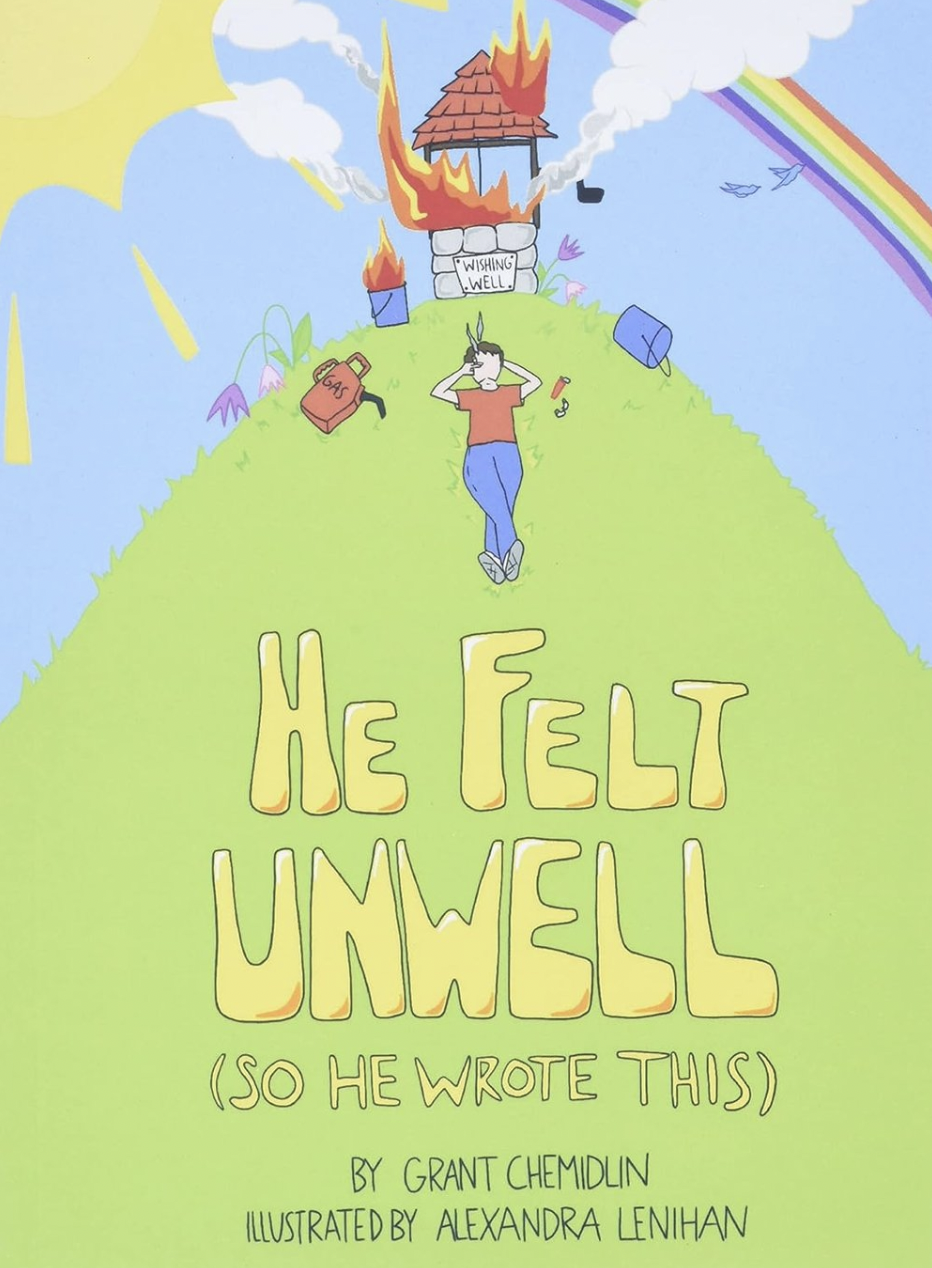
D: So I’ve read your first book, He Felt Unwell (So He Wrote This). I have that book, and then I have the original version of Things We Lost in the Swamp before it was re-branded with the new title and cover. I feel like one of those people that have a limited record that isn’t made anymore. I’m so excited.
G: That’s so cool!
D: Can you tell me a little bit about the process of when you wrote He Felt Unwell (So He Wrote This), and the self-publishing process with that book?
G: First off, thank you for buying the book, and for reading it. That’s so kind. With He Felt Unwell, I actually didn’t set out to write a book. I was just writing and writing, going poem to poem, then one day, I kind of looked around at what I had and realized it was a lot. At the time, I had been reading books like Milk and Honey by Rupi Kaur and The Princess Saves Herself in This One by Amanda Lovelace, and realized, I want to do that! I want a project to sink my teeth into, something physical I can hold in my hands. So, I asked my friend Alexandra if she’d be willing to illustrate the poems—she has a very cool and simple Shel Silverstein style, which is exactly what I was envisioning—a Shel Silverstein book for depressed adults. We got to work and it was amazing. She’s so talented. Her illustrations made the poems completely come to life! Once the book was done, and it came time for the actual self-publishing part, we used KDP. There were some bumps in the road—trying to get the margins and gutters just right, but eventually we got it to a place we were both happy with. As we were finishing up though, I realized no one knew I wrote poetry. I hadn’t really told anyone. So that’s when I decided to start posting poems on Instagram.
D: I was wondering that, if the book came first or if the Instagram page came first. I love that. So the Instagram page was a way to market yourself after the book was already finished.
G: Yes, I realized if we wanted people to read this book, then I needed to reintroduce myself online as a poet. For a few months, I posted poems and engaged with people in the comments. Then we hit publish. It was exciting. But of course, I’ve grown so much since then as a poet. I look back at those early poems on Instagram with, what Louise Glück called, “a fond embarrassment.”
D: I feel the same way, and I think most writers feel that way. I think that’s how you should feel almost with your writing if you look back, and obviously, you’re still going to like what you’ve written in the past, but I think that shows as you evolve as a writer and your craft gets a little more precise and in tune to what you want it to be. You look back on other poems or fiction stories and different written work, and you’re like, oh, this is not good, but I wouldn’t have written it this way at that time. But that’s the dream to always evolve into a better writer and poet. I sometimes look back on things, and it’s interesting, you know, it’s only been four or five months, I wouldn’t have written some of the poetry I submitted and was accepted into graduate school this way.
G: Yeah, and that’s one of the pros of doing a graduate-level program. I definitely don’t think anyone needs to get an MFA to be a good writer, but it does force you to be more critical of your own work. You’re introduced to so many other voices and ways of thinking that it opens up your mind to help you continue to grow and evolve your craft.
D: I want to discuss the MFA in a bit, but I want to focus on publishing when we’re comparing self-publishing to traditional publishing. What was the experience or process like when Central Avenue Publishing picked up that book because you originally self-published Things We Lost In The Swamp?
G: I did originally self-publish Things We Lost in the Swamp, but only after exhausting all the traditional routes: small press open reading periods, book contests. I basically decided I’m happy to self-publish again, and wanted to just put it out into the world. Then about a year or so after self-publishing, I saw Central Avenue had opened their submissions—they accept previously self-published books—and the rest is history! The process itself was really fun. First, I worked with an editor on overall development notes, I cut a poem or two, did some rearranging, then I worked with a copy editor, going through and getting rid of all the extra “that’s” and “just’s.” You don’t realize how much frivolous words you have in your poems until a copy editor is highlighting them. I also learned when to—not stand my ground, it was never confrontational—but when to be firm in my original creative choices. Overall, it was a great experience. My input was always valued and I felt very taken care of.
D: I love that. I am having the same experience. My poetry professor this semester has instilled in me to cut the articles and when I reread my poems, I use a lot of just small filler words that I thought were needed. But he’s just like, no, cut, cut, cut, cut. And it’s a much crisper image now.
G: The poet Marie Howe talks about holding up the page and shaking out the “dead” language. I’ve always loved thinking of it like that.
D: What advice would you have for someone that’s querying to traditional publishers or small presses?
G: Remember that it’s a numbers game for the most part. You can’t let a “No” from a press warp your own perception of your book. It doesn’t mean it’s bad. Maybe it’s just not right for them, but could be very right for someone else. I think as writers, we have to always protect our creativity. We can’t let outside validation, either from followers online or publishers, influence our process. If this is a press you really want to be published with though, maybe try revising or reshaping your manuscript, then resubmitting during the next contest or open reading period. A lot of these places rotate in new readers.
D: My perspective has changed a lot in terms of submitting poems to different places. Now that I’m on the other end, I used to get so sad and hurt when you get a rejection. But now that I am going through submissions for Thin Air, and I’m on the other side of things, it’s interesting. There are so many good poems that I’ve read, but the style or the voice or even what they’re talking about doesn’t connect to myself and the other editors, or just the language could be better. But it doesn’t mean it’s a bad poem. So it’s been really interesting being on the other side of it now.
G: I was the managing editor for Antioch’s MFA magazine, Lunch Ticket, and I agree, I gained a lot of insight from being on the other side of things. Sometimes, as a reader of submissions, you’re tired, you’ve had a bad day, you just want to get through it because there’s a thousand submissions left to be read. As writers and submitters, we have to remember there’s a human on the other side of the screen, and sometimes it’s a little bit out of our control. Greatest thing we can do for ourselves is put our best, most interesting poems first in our submission packet!
D: We talked about this a little bit already, but how did your experience with your two-year MFA program change or shape the way that you write poetry now?
G: It made me realize I didn’t really know how to revise my poems, or I didn’t know what to look for. My professors helped point me to moments where I was narrating, telling instead of showing, not being precise enough, not being inventive or surprising enough. It was really helpful. Now, I can see the weaknesses in my poems. I can take a mundane or cliché piece of language and elevate it to something more interesting. I’ve also done a lot of work learning to trust my reader. I was always over-explaining images or wrapping up a poem with a neat, tidy bow. But now I write toward mystery, or at least letting readers dig down and figure out the meaning for themselves.
D: I completely agree. I’m learning this semester with my poetry professor that there’ll be lines where I am telling something that’s happening, and he’s just getting me to think more outside the box of how I can show this in an actual image. It’s been wild these last few months. It’s shaken up how I view poetry now. I am always now thinking of how an image can show a feeling or presence. I’m also just playing around now with language and words. We’ve read a few poets who have done this really interesting thing where they turn nouns into verbs, and it’s blowing my mind.
G: Yes! I love replacing nouns with verbs, and vice-versa. It’s so fun and makes a line instantly more intriguing.
D: You are a poetry mentor for a program called Pocket MFA. I didn’t even know that was a thing. It’s a condensed 12-week online MFA program. Am I understanding that correctly?
G: So it’s not an actual MFA degree, but it’s modeled exactly like a low-residency MFA program, so writers who either can’t, or don’t want to, commit to a full two-year MFA program, can still get a taste of what it’s like. My first time will be in January—January to March. It’ll be my first real teaching experience. I’m both nervous and excited. The poet Ada Limón said something once about how, even though she’s a teacher, she always reminds herself she’s still a student too, a forever-student—of life and poetry. That’s something I’m taking with me into the start of my own teaching career.
D: Do you have any ideas for lesson plans or what specifically you would want to teach your students? What are the most important aspects that you learned in your own program that you want to instill in them?
G: That’s a great question. I’ve actually just finished my lesson plans! I’ve decided to dedicate one whole session to Gregory Orr’s Four Temperaments, which I learned about during my MFA and really opened my mind to how poems operate, how we can identify what’s happening within them. The four temperaments are story, structure, music, and imagination; and Orr argues every poet is born with a desire to specialize in one, and that all good poems have some combination of all four. I also have a lesson planned all around form, and another that looks at love poems and tries to answer the question, Why are we afraid to write them?
D: That’s awesome. I wondered if you were—because you mentioned love poems—I have been trying to get better at this, but I struggle writing happy poems, and I don’t know if you feel the same way. It’s because when I started writing poetry, it was to process painful moments and experiences, and you see from He Felt Unwell (So He Wrote This); that seems to be how you started as well. Do you still find yourself only really writing about pain and depression or sad moments that you need to process and understand better? Or have you evolved into writing happier experiences?
G: I think I’ve taken the challenge upon myself to write more joyful poems, specifically about queer joy. I don’t think there’s nearly enough representation of queer people in literature, especially of queer people being happy or silly or fun. So, just writing more gay love poems, writing more gay, happy, joyful poems. I think I’ve realized, through reading poets like Chen Chen, how powerful of a tool delight can be, how it disarms a reader, makes them more susceptible or willing to receive painful emotions. And another thing that’s evolved, for me, is my actual writing process. I used to come to the page with a specific feeling or memory or image to explore, but these days, I often sit down having no idea what I’m going to write about. I’ve been playing with surrendering to silence, to the unknown, then seeing where the poem takes me, where language leads me to.
D: Do you have any upcoming work you’d like to share?
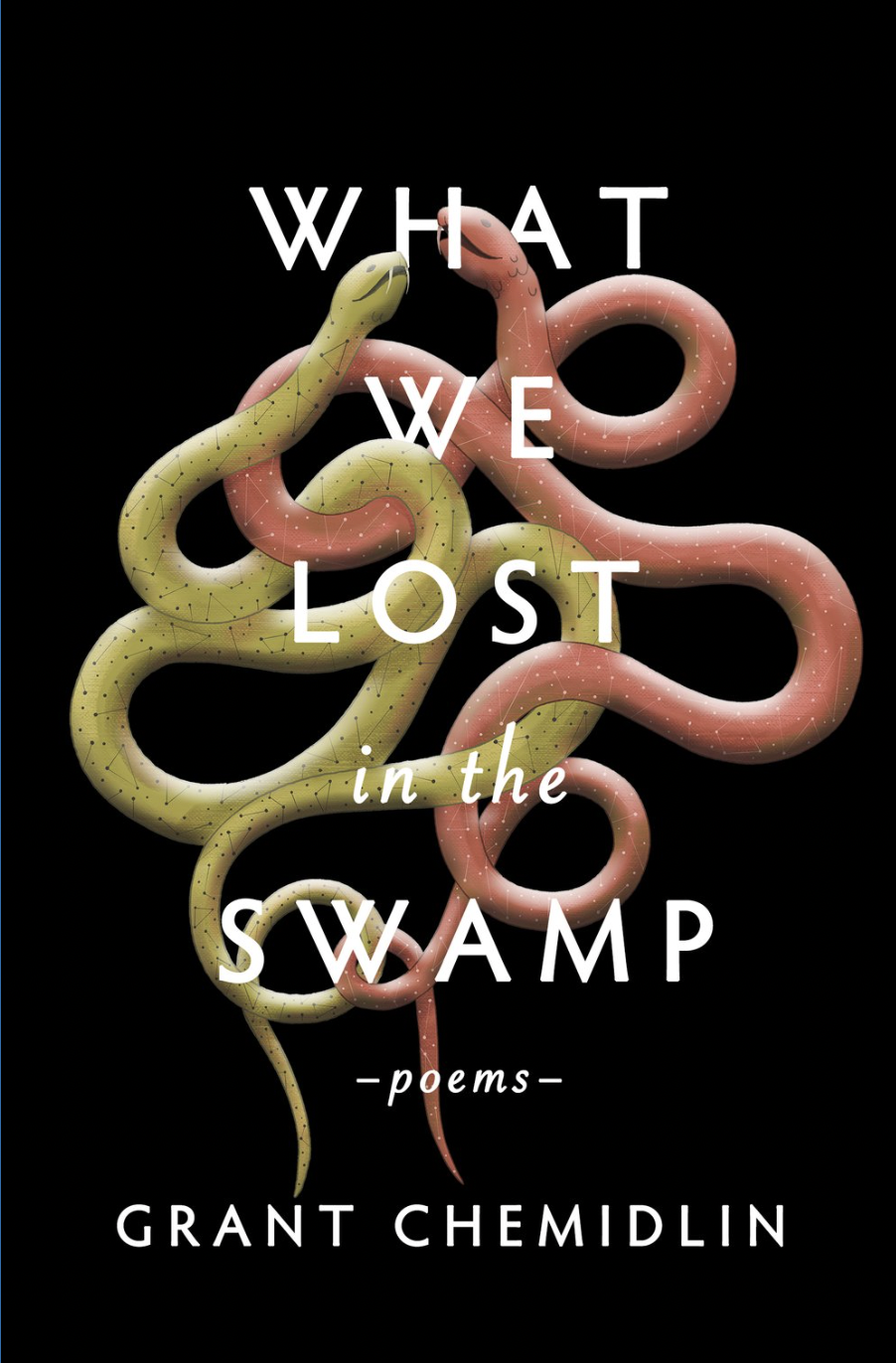
G: I have two manuscripts, and both are starting to go out into the world. Hopefully, something will happen, but you never know. I’m still very actively promoting What We Lost in the Swamp. If I were to promote anything, I guess it’s that! It’s been a nice journey so far, and hopefully, it will continue reaching more and more readers.
D: Well, I wish you the best. I’m excited to see any updates on Instagram if those two manuscripts get picked up. That’s so exciting!
G: Yes, thank you so much. Do you have anything you’re working on? I know you have a book out. Is there a new book you’re working on during your MFA?
D: That’s my hope; that’s my intention for the collection I want to write for my thesis. I’m hoping to submit that after graduation. It’ll be my second one, but I do have Things You Don’t Talk About. I self-published it in 2022 and submitted it to Central Avenue because they had open submissions.
G: Amazing.
D: Fingers crossed! Thank you so much for taking time out of your day to do this.
G: Thank you for thinking of me and for inviting me. This was wonderful. Please keep me updated on your projects and your semester.
D: I will, thank you. Have a good weekend.
G: Thank you. Bye, December.
D: Bye.
Grant Chemidlin is the author of What We Lost in the Swamp (Central Avenue Poetry, 2023), a finalist for the Lambda Literary Award for Gay Poetry. His other works include the chapbook New in Town (Bottlecap Press, 2022) and the illustrated collection He Felt Unwell (So He Wrote This). Recent poems can be found or are forthcoming in The Los Angeles Review, Palette Poetry, Laurel Review, Quarterly West, Iron Horse Literary Review, and Tupelo Quarterly, among others. He lives in Los Angeles with his husband and cat.
